Canine Oral Melanoma: Mouth Changes That Need Timely Assessment
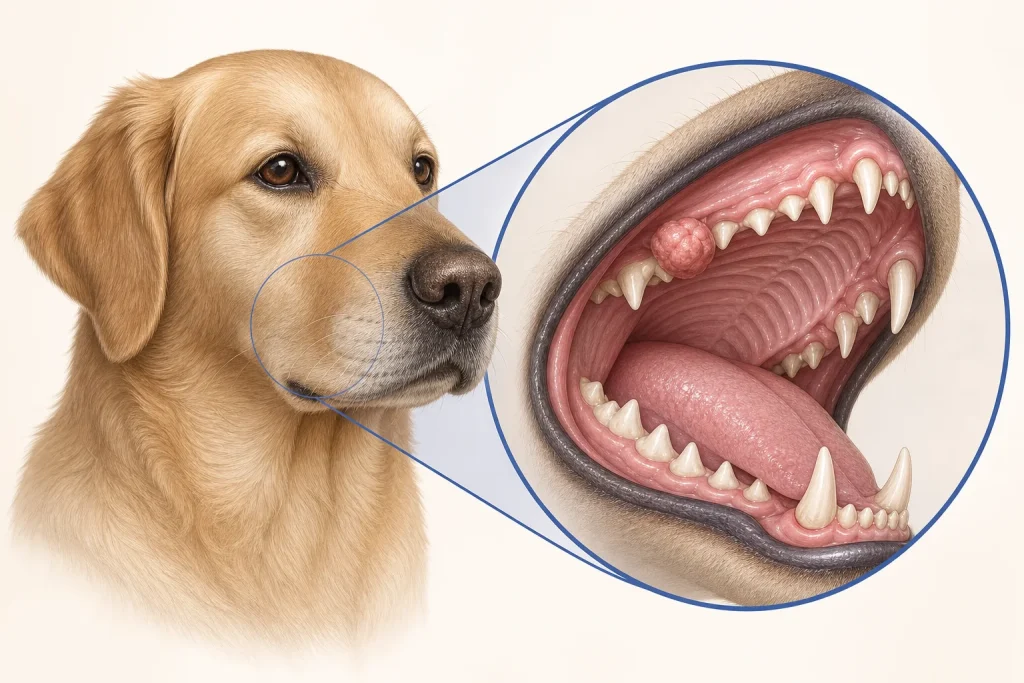
Overview
Canine oral melanoma is a malignant melanocytic tumor with potential for local invasion and metastasis. Some lesions lack dark pigment, and several other benign and malignant diseases can look similar.
Common signs
Bad breath, drooling, blood from the mouth, chewing on one side, dropping food, reluctance to eat hard food, loose teeth, visible oral tissue, facial swelling or weight loss.
Common locations
Gums, lips, cheek, palate, tongue and other oral tissues. Local anatomy and possible bone involvement shape treatment feasibility.
Diagnosis discussion
An examination under sedation or anesthesia may be needed for a complete view. Biopsy with histopathology establishes diagnosis. Oral imaging or CT can map local disease; regional lymph-node sampling and chest imaging may be recommended because normal-sized nodes can still contain tumor cells.
Urgency and when to contact a veterinarian
Arrange a timely visit for any oral mass or persistent oral sign. Uncontrolled bleeding, inability to swallow, respiratory distress, marked facial swelling or severe pain requires urgent or emergency care.
Treatment discussion
Surgery and radiation are principal local-control tools, alone or in sequence. Systemic therapy, licensed canine melanoma immunotherapy or clinical trials may be discussed by an oncologist, but suitability and expected benefit vary. Pain, nutrition and oral hygiene support matter throughout care.
Home monitoring
Track eating speed, food texture tolerated, drooling, odor, bleeding, facial symmetry, weight and comfort. Offer only the texture approved by the veterinary team and avoid fingers, swabs or home products on the mass.
Questions to ask your veterinarian
- Has the mass been biopsied, and is additional staining needed to confirm melanoma?
- What imaging best defines bone and deep-tissue involvement before local treatment?
- Were the regional lymph nodes sampled rather than judged only by size?
- What feeding, pain and bleeding plan should we follow at home?