Canine Leiomyosarcoma: Smooth-Muscle Tumors Require Site-Specific Planning
Overview
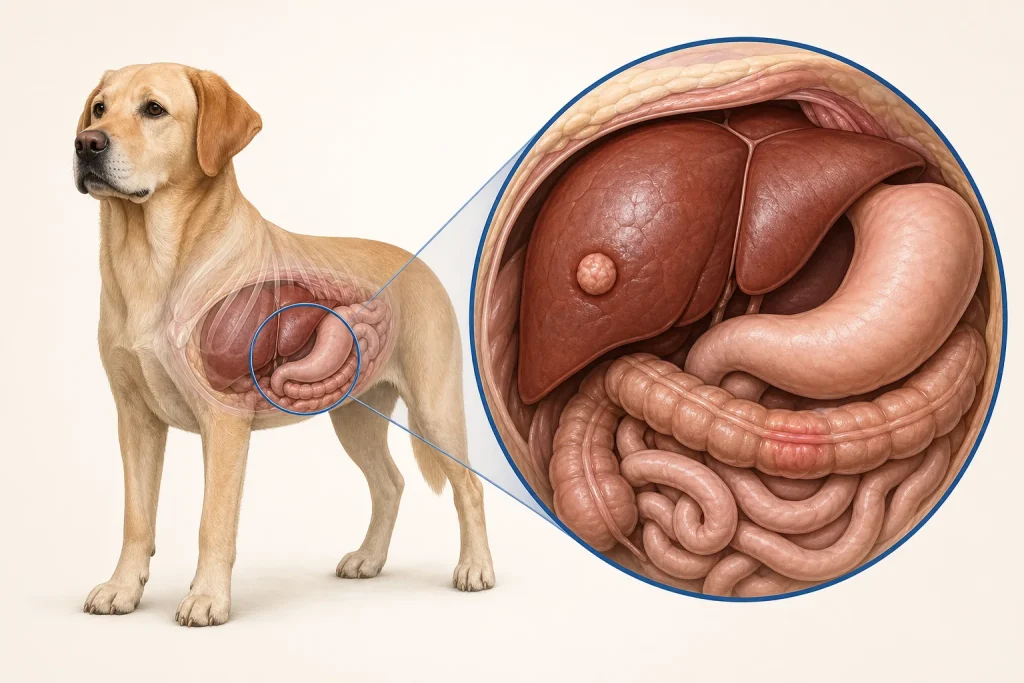
Leiomyosarcoma is a malignant tumor of smooth muscle. It can arise in the gastrointestinal tract or other organs and soft tissues, so signs and treatment depend strongly on location rather than the tumor name alone.
Common signs
An external or abdominal mass, reduced appetite, weight loss, vomiting, diarrhea, dark stool, abdominal discomfort or weakness. Some peripheral masses cause few signs until they enlarge.
Common locations
Stomach or intestinal wall, spleen and other smooth-muscle-containing tissues; cutaneous or subcutaneous forms also occur.
Diagnosis discussion
Ultrasound or cross-sectional imaging helps locate internal disease and assess resectability. Cytology may not fully classify a spindle-cell tumor; biopsy or surgical histopathology is needed, with immunohistochemistry sometimes used to distinguish related sarcomas.
Urgency and when to contact a veterinarian
Prompt evaluation is warranted for a growing mass, unexplained weight loss or persistent gastrointestinal signs. Repeated vomiting, black stool, collapse, pale gums or a painful distended abdomen requires urgent care.
Treatment discussion
Surgical removal is commonly discussed for localized resectable disease. Margins, mitotic activity, rupture, organ involvement and staging guide whether additional oncology treatment or close surveillance is appropriate.
Home monitoring
Track food intake, weight, vomiting, stool color, abdominal comfort and energy. After surgery follow feeding, medication, incision and activity instructions exactly.
Questions to ask your veterinarian
- What organ and tissue layer does imaging suggest is involved?
- Will biopsy change surgery, or is surgical removal the safest diagnostic route?
- Which pathology tests distinguish this from related spindle-cell tumors?
- What signs suggest obstruction or gastrointestinal bleeding?