Canine Intraocular Tumors: Pigment Change, Redness, or Vision Loss
Overview
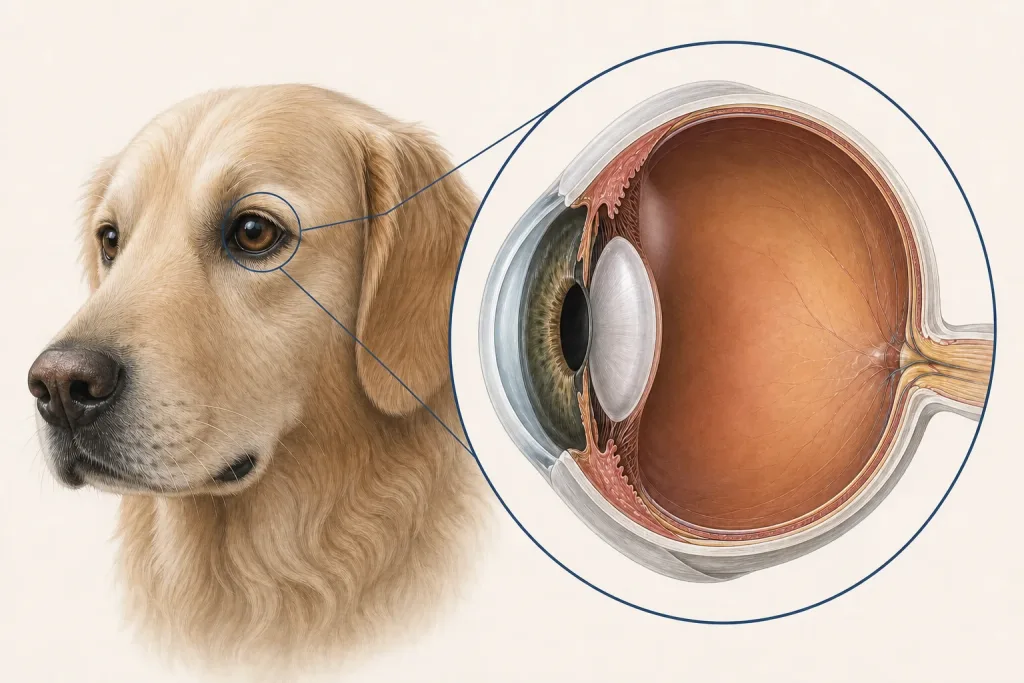
Tumors can arise from structures inside the canine eye or spread there from another site. Pigment alone is not a diagnosis, and inflammation, glaucoma, cysts, trauma, and other eye diseases can resemble an intraocular mass.
Common signs
New iris pigment or a visible mass, persistent redness, a misshapen pupil, cloudiness, bleeding inside the eye, enlarged globe, squinting, reduced vision, or bumping into objects may occur. Some lesions are found before an owner notices discomfort.
Common locations
The iris and ciliary body are common visible or anterior sites; tumors can also involve the choroid, retina, orbit, or multiple ocular tissues. Local anatomy and evidence of spread guide the workup.
Diagnosis discussion
An ophthalmic examination may include slit-lamp evaluation, intraocular pressure, retinal examination, and ocular ultrasound when deeper structures cannot be seen. Systemic staging and specialist review may be advised. Tissue diagnosis sometimes follows removal rather than needle sampling.
Urgency and when to contact a veterinarian
A suddenly painful, red, enlarged, cloudy, or vision-impaired eye warrants same-day assessment. Do not wait for a routine recheck if the dog is squinting continuously, cannot settle, or the eye has been injured.
Treatment discussion
Monitoring, laser or local procedures, removal of the eye, systemic therapy, or treatment of metastatic disease may be discussed depending on tumor type, pain, vision, and spread. When an eye is blind and painful, comfort is a central treatment goal.
Home monitoring
Track eye appearance, pupil shape, redness, discharge, squinting, navigation, sleep, appetite, and use of prescribed drops. Never use leftover steroid or human eye medication without an examination because some eye conditions can worsen.
Questions to ask your veterinarian
- Is the eye painful, and is useful vision present?
- Which examination or imaging features support a tumor versus inflammation or a cyst?
- Is systemic staging indicated before a local procedure?
- What changes should trigger same-day reassessment?