Canine Adrenal Tumors: Hormone Effects and Surgical Anatomy
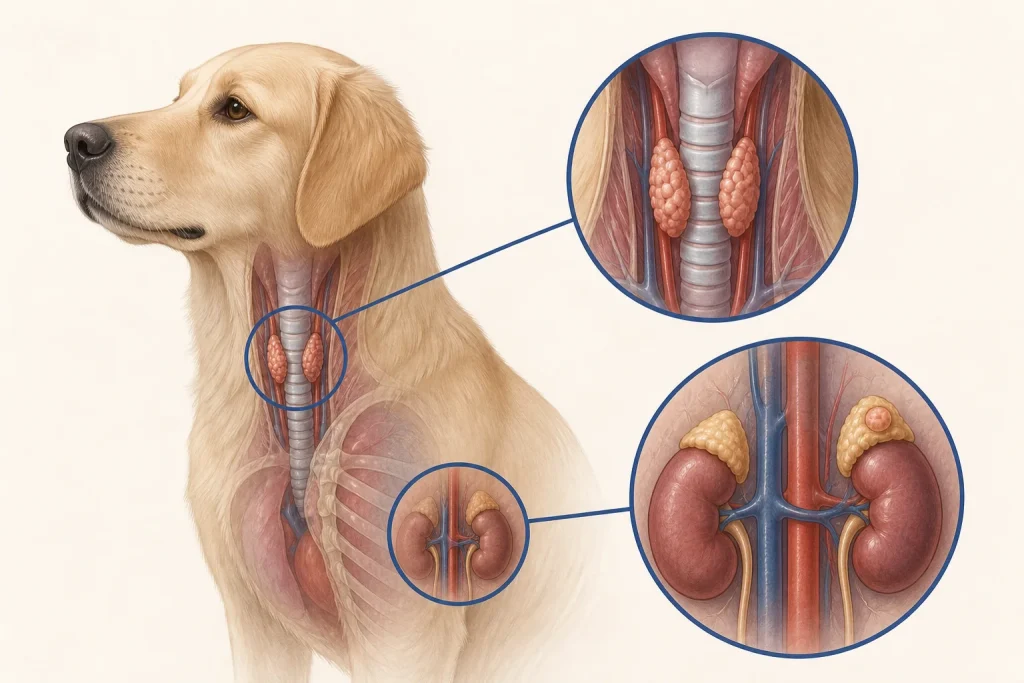
Overview
An adrenal mass may be functional or nonfunctional, benign or malignant, and sometimes incidental. Adrenal cortical tumors and pheochromocytomas can produce different hormone effects, while non-neoplastic enlargement may also alter gland appearance.
Common signs
Increased thirst and urination, panting, muscle weakness, abdominal enlargement, skin or coat change, hypertension-related signs, episodic restlessness, collapse, or no outward signs may be reported. The pattern depends on hormone secretion and mass effect.
Common locations
The adrenal glands lie near major blood vessels and the kidneys. Tumor contact with or invasion into the vena cava and adjacent structures materially affects anesthesia and surgical planning.
Diagnosis discussion
Bloodwork, urinalysis, blood pressure, endocrine testing selected for the suspected syndrome, and ultrasound or CT may be used. Imaging cannot always declare benign versus malignant. Hormone preparation may be necessary before sampling or surgery for selected tumors.
Urgency and when to contact a veterinarian
Collapse, profound weakness, breathing difficulty, sudden abdominal pain, neurologic signs, or repeated episodes of severe agitation or pallor requires urgent care. Do not stop prescribed endocrine medication abruptly unless the veterinary team instructs it.
Treatment discussion
Monitoring may be appropriate for selected incidental lesions. Medical control of hormone effects, adrenal surgery at an experienced center, oncology treatment, or palliative care may be discussed. The anesthesia and vascular plan is as important as the mass size.
Home monitoring
Record thirst, urination, appetite, panting, sleep, weakness, skin changes, episodic events, blood-pressure results, and medication doses. Video and time intermittent spells if safe, and bring a full drug and supplement list to every visit.
Questions to ask your veterinarian
- Is this mass producing hormones, and which tests support that?
- Does CT show vascular invasion or another primary site?
- What preoperative medication and anesthesia expertise are needed?
- If we monitor, what imaging and laboratory change will alter the plan?