Canine Oral Mast Cell Tumors: A Rare Location With Different Questions
Overview
Mast cell tumors most often involve skin or subcutaneous tissue, but they can arise in the oral cavity. An oral site changes the differential diagnosis, achievable surgical margins, regional lymph-node assessment, and functional priorities.
Common signs
Bad breath, drooling, bleeding, reluctance to chew, dropping food, facial swelling, pawing at the mouth, weight loss, or a visible gingival, lip, tongue, or palatal mass may occur.
Common locations
Oral lesions may involve gingiva, lips, tongue, palate, or deeper tissues. The draining mandibular and retropharyngeal lymph nodes may be relevant even when they are not obviously enlarged.
Diagnosis discussion
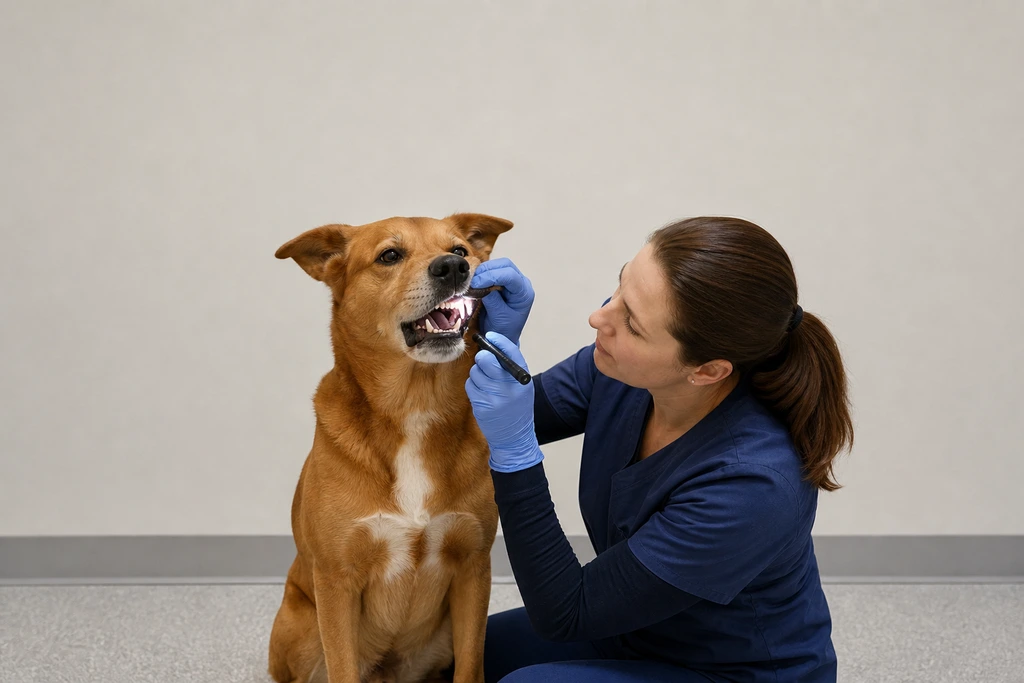
Sedated oral examination, cytology or biopsy, histopathology, regional node sampling, and CT or other imaging may be discussed. The team must distinguish an oral mast cell tumor from melanoma, squamous cell carcinoma, dental disease, and other round-cell tumors.
Urgency and when to contact a veterinarian
Heavy bleeding, inability to swallow water, airway noise or breathing difficulty, severe pain, or rapid facial swelling needs urgent care. Persistent oral bleeding or eating change warrants a prompt examination.
Treatment discussion
Surgery, radiation, systemic therapy, or combined treatment may be considered according to pathology, local extent, nodal findings, and function. Pain, nausea, nutrition, and safe food texture should be planned at the same time.
Home monitoring
Track food and water intake, chewing side, dropped food, drooling, bleeding, breath odor, facial symmetry, weight, and medication effects. Do not repeatedly manipulate the lesion because mast-cell mediator release and bleeding may worsen swelling.
Questions to ask your veterinarian
- Which oral tumor types are still in the differential?
- Should regional lymph nodes be sampled even if normal in size?
- What imaging is needed before choosing surgical margins?
- How will eating, pain, and airway risk be supported during treatment?