Chemotherapy-Day Logistics: From Check-In to the Next Morning
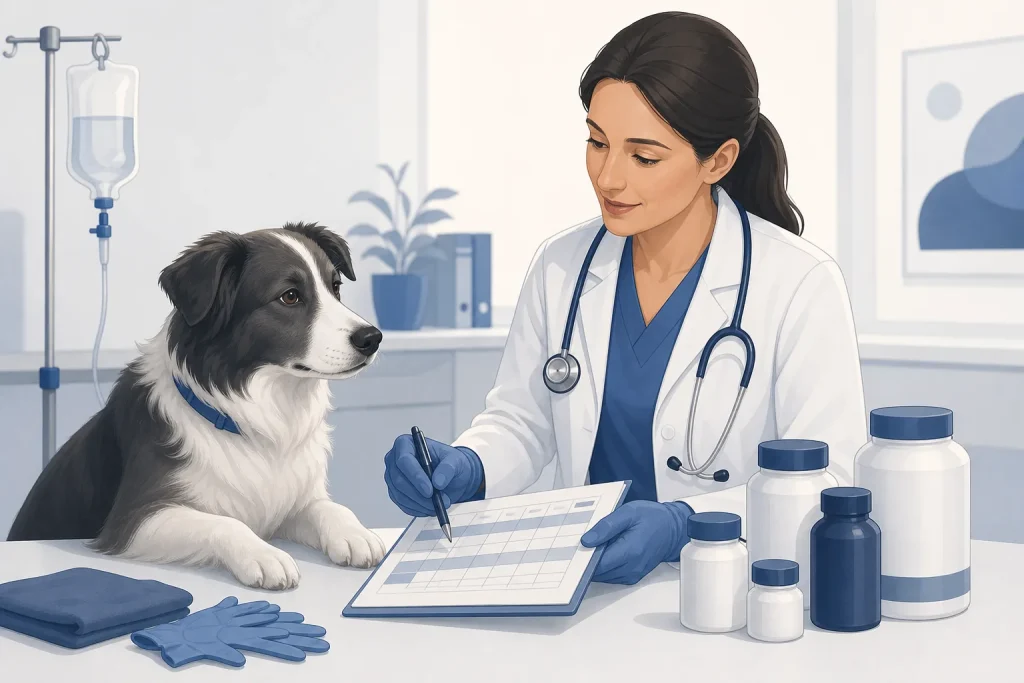
Who this guide is for
Dog owners preparing for an injectable or clinic-administered chemotherapy visit who want a repeatable travel, check-in, and first-night routine.
Guide summary
A chemotherapy visit works best when owners follow the clinic’s food and medication instructions, report changes before treatment, and leave with written handling precautions and a symptom threshold. The drug, protocol, health check, and laboratory results determine what happens that day.
Before you start
Confirm whether to feed, which morning medicines to give, what sample or records to bring, and whether same-day laboratory results are required. Report fever, vomiting, diarrhea, poor appetite, new medication, or unusual exposure before the team administers treatment.
Step-by-step guidance
- Pack the current medication and supplement list, treatment calendar, symptom log, and emergency contacts.
- At check-in, describe changes since the last visit rather than saying only that the dog is “fine.”
- Ask which drug was given, what monitoring occurred, and when the next blood test is due.
- Write down home handling and waste precautions for that specific drug and duration.
- Keep the first evening quiet, offer food and water exactly as directed, and record any change through the next morning.
What to monitor
Appetite, water intake, vomiting, stool frequency and consistency, energy, temperature only if trained and instructed, urine, pain, infusion-site change, and any accidental medication or waste exposure.
When to call a veterinarian
Use the clinic’s protocol-specific number for fever, repeated vomiting or diarrhea, refusal of food beyond the stated threshold, marked lethargy, unusual bruising, or medication error. Collapse, breathing difficulty, seizure, uncontrolled bleeding, or severe weakness needs emergency care.
Checklist
- Pre-visit food and medication instructions confirmed
- Current symptom and medication list packed
- Drug name and treatment date recorded
- Home handling and waste precautions understood
- Next bloodwork and appointment scheduled
- Daytime and after-hours oncology numbers saved