Treatment, Medication & Supplement Directory
A comprehensive encyclopedia of medicines, chemotherapy protocols, targeted and immune therapies, supplements, Chinese herbal formulas, Traditional Chinese Veterinary Medicine (TCVM) approaches, and supportive-care options used or discussed in canine and feline tumor care. Directory entries explain what each option is, where it may fit, its evidence and safety boundaries, and what to discuss with a veterinarian; they are references, not individualized prescriptions or rankings.

Palliative Care Plan: Concurrent Comfort From Diagnosis Onward
Palliative care focuses on comfort and function and can begin at diagnosis while tumor-directed treatment continues. Hospice is a later, more intensive form of comfort-focused care; neither means…
Read more
Veterinary Rehabilitation During and After Cancer Care
Veterinary rehabilitation uses a medically supervised assessment and individualized plan to address pain, weakness, mobility limits, deconditioning, and functional goals. In oncology it must be coordinated with the…
Read more
Limb Amputation for Tumor Control or Pain Relief
Amputation may be discussed for selected limb tumors or uncontrollable limb pain after staging, mobility, comorbidity, and family goals are reviewed.
Read moreUrinary Tract Stenting for Tumor-Related Obstruction
A urinary stent may restore flow for selected tumor-related obstruction, but it is a palliative or enabling procedure rather than treatment of the underlying cancer.
Read more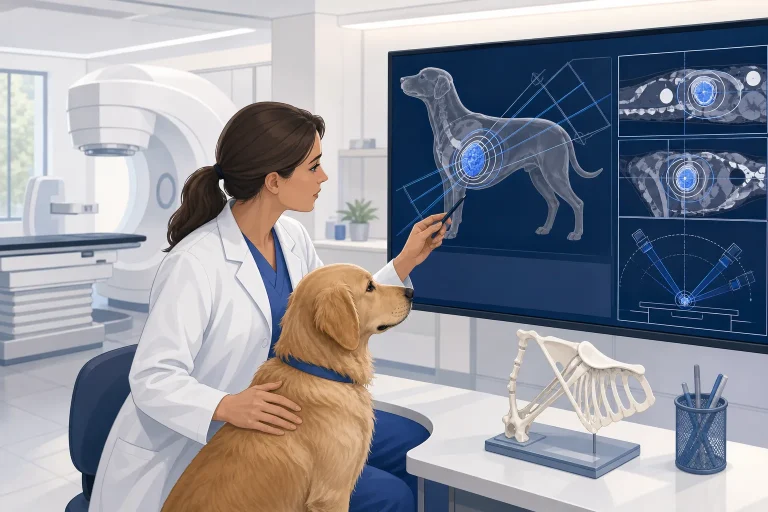
Palliative-Intent Radiation: Symptom Goal and Tradeoffs
Palliative radiation uses a comfort-focused treatment plan for selected painful or obstructive tumors and must be evaluated by symptom goal, burden, and field-specific risk.
Read more
Gabapentin as an Adjunct in Cancer Pain Plans
Gabapentin may be one component of multimodal pain or anxiety support, but effectiveness varies and sedation, weakness, kidney function, and compounded products need review.
Read morePrehabilitation Before Major Cancer Surgery
Prehabilitation prepares selected patients and households for surgery through safe conditioning, pain control, nutrition, equipment, and recovery planning without delaying urgent treatment.
Read moreRehabilitation After Limb Amputation
Post-amputation rehabilitation supports safe transfers, balance, remaining-limb loading, endurance, home access, and confidence after surgical clearance.
Read moreRange-of-Motion and Strengthening Exercises: Clearance Before Progression
Range-of-motion and strengthening exercises must match diagnosis, protected tissues, pain, healing phase, bone integrity, blood counts, and functional goals.
Read moreHarnesses, Slings, Carts, and Mobility Aids in Cancer Care
A properly selected and fitted aid can support transfers or walking, while a poor fit can create pain, pressure injury, falls, or caregiver strain.
Read moreHome-Environment Adaptation for Weak or Painful Oncology Patients
Small environmental changes can reduce falls, painful effort, and caregiver lifting while preserving access to basic needs and social contact.
Read moreCancer-Related Fatigue and Activity Pacing
Activity pacing balances movement and rest around disease, anemia, treatment, pain, cardiopulmonary status, sleep, and what the patient values.
Read more