Canine Thyroid Tumors: A Neck Mass and the Questions Imaging Answers
Overview
A canine thyroid tumor may appear as a ventral neck mass, but enlarged lymph nodes, salivary disease, cysts, and tumors from other structures can occupy the same region. Thyroid masses vary in mobility, hormone activity, invasiveness, and metastatic risk.
Common signs
A lump low in the neck, coughing, gagging, voice change, swallowing difficulty, altered breathing, weight change, restlessness, or exercise intolerance may be reported. Many affected dogs do not show a recognizable hormone syndrome.
Common locations
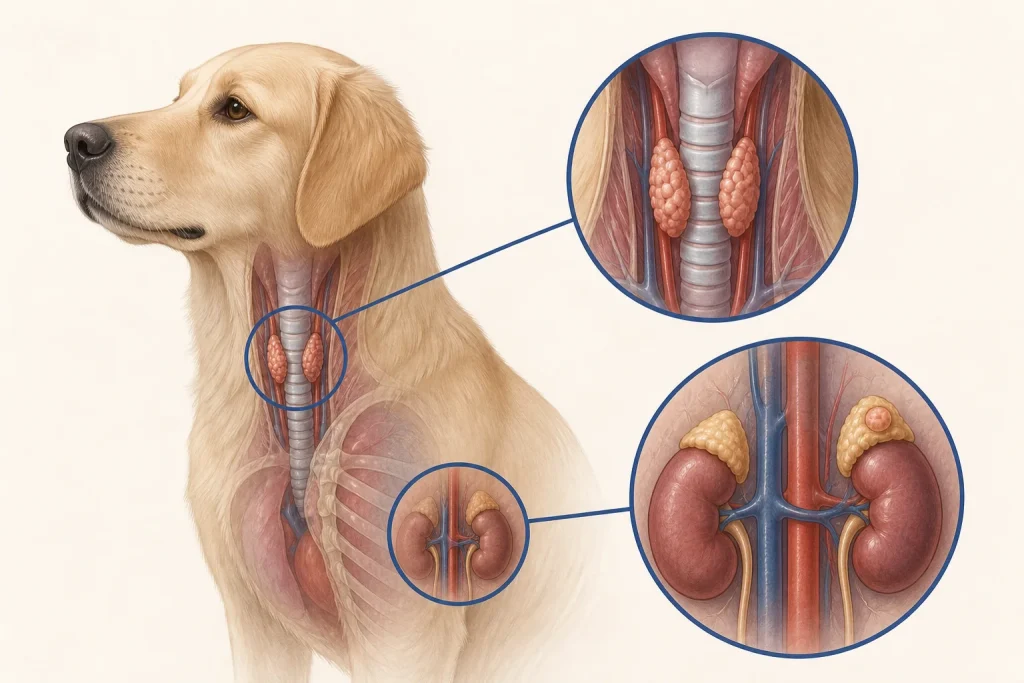
The thyroid glands sit beside the trachea. The relationship to major blood vessels, airway, esophagus, nerves, and regional lymph nodes matters for surgery and radiation planning.
Diagnosis discussion
The team may combine examination, thyroid-related laboratory testing, ultrasound or CT, chest imaging, and carefully planned sampling. A mobile, well-defined mass and a fixed invasive mass can lead to different discussions, but tissue diagnosis remains important.
Urgency and when to contact a veterinarian
Breathing distress, blue or very pale gums, collapse, or rapidly progressive swallowing difficulty is an emergency. Any enlarging neck mass or persistent cough, gag, or voice change needs prompt evaluation.
Treatment discussion
Surgery may be considered for suitable mobile tumors. Radiation, systemic therapy, radioactive iodine for selected functional disease, or comfort-focused care may be discussed according to pathology, invasion, spread, and patient health.
Home monitoring
Record neck size without pressing the mass, breathing sounds at rest, cough or gag episodes, swallowing, appetite, weight, activity, and medication effects. Use video of intermittent breathing or voice changes only if it does not delay urgent care.
Questions to ask your veterinarian
- Is the mass arising from thyroid tissue or another neck structure?
- Does imaging show invasion of vessels, airway, or nearby tissues?
- Is the tumor hormonally active?
- Which local-control option fits the anatomy and treatment goal?