Prehabilitation Before Major Canine Cancer Surgery: A Veterinary Evidence Boundary
Summary
Prehabilitation can define baseline function and prepare home support before surgery, but canine oncology evidence is limited and exercise must respect pain, unstable bone, cardiopulmonary disease, and tumor anatomy.
Article
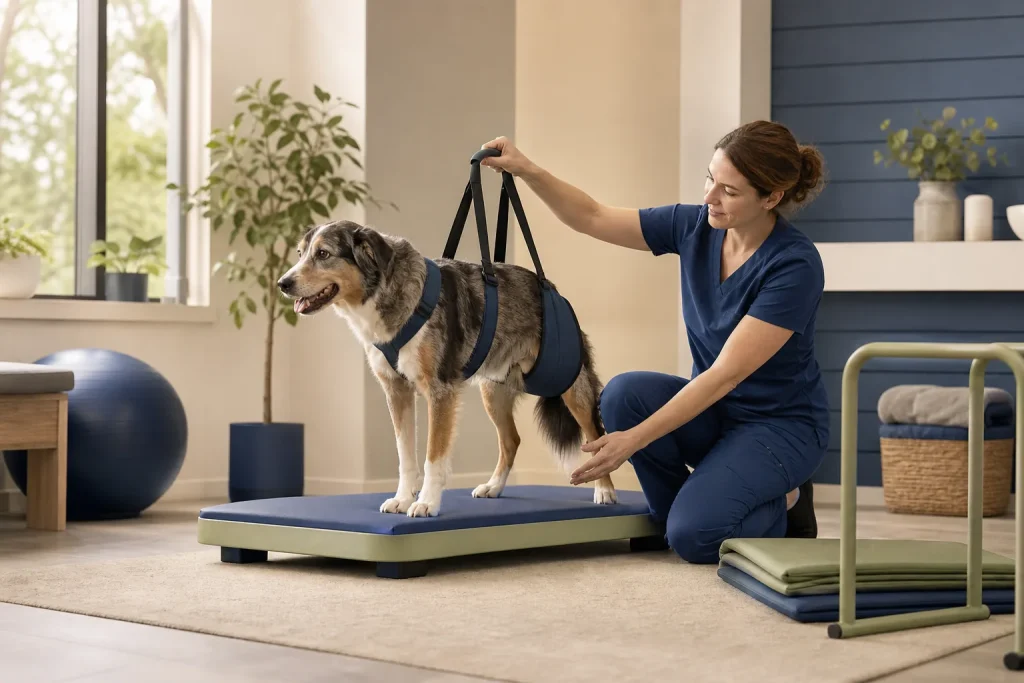
Evidence-informed clinical review. Prehabilitation means assessing and supporting function before a planned intervention. In a dog facing major tumor surgery, this may include safer transfers, surface traction, caregiver technique, nutrition review, pain control, equipment planning, and low-burden activity. It is not fitness training performed through pain or fatigue.
The clinical question
The rehabilitation and surgical teams should decide which function is likely to change, what tissue or bone must be protected, whether time before surgery is sufficient for useful preparation, and which baseline measures will guide recovery. Every exercise or modality needs medical clearance tied to the operative plan.
What current evidence can establish
Veterinary rehabilitation standards support qualified assessment and coordination, while direct canine oncology prehabilitation trials are sparse. Human cancer-surgery evidence suggests feasibility and functional benefit in selected populations but cannot be assumed to predict canine outcomes. ACVS postoperative guidance supports planning for safe recovery and restrictions.
A decision-focused pathway
Assess gait, transfers, toileting, pain, fatigue, cardiopulmonary tolerance, home surfaces, stairs, vehicle access, body and muscle condition, and caregiver lifting ability. Practice equipment and low-risk handling before surgery. Obtain the surgeon’s explicit restrictions and ask whether a tumor-weakened bone, bleeding mass, or fresh biopsy site changes activity.
The preoperative plan should connect directly to discharge: where the dog will rest, how medication and toileting will work, what assistance device is approved, and when rehabilitation reassessment occurs. Nutrition and pain management belong beside movement because poor intake and uncontrolled pain undermine function.
Evidence gaps and interpretation
The evidence boundary must remain visible: human systematic reviews are not canine efficacy trials, and general rehabilitation principles do not prove faster cancer recovery. A short preoperative interval may be used mainly for education and home preparation. Delaying indicated surgery solely to complete a program may create harm.
Safety, monitoring, and escalation
Stop and seek reassessment for new swelling, marked pain, bleeding, wound change, breathing difficulty, collapse, or sudden loss of function. Do not apply heat, deep massage, stretching, electrical modalities, or resistance over an undiagnosed mass, unstable bone, or surgical field without clearance.
Build prehabilitation around a documented deficit
Prehabilitation is most meaningful when it targets a problem found before surgery, such as reduced mobility, poor intake, respiratory limitation, uncontrolled pain, or difficulty with the home environment. A baseline of walking tolerance, transfers, muscle condition, nutrition, and caregiver support makes the goal observable. Exercises or conditioning that are reasonable for one tumor location may be unsafe for a dog with fracture risk, bleeding, cardiopulmonary disease, or neurologic impairment.
Much of the formal cancer-prehabilitation evidence comes from human medicine, so it should not be presented as proof of a canine outcome. Veterinary clearance, diagnosis-specific restrictions, and the planned operation define what can be attempted safely. The useful question is whether a limited intervention improves readiness or recovery logistics without delaying necessary care, not whether a generic program can make every patient fit for surgery.
Questions for the veterinary team
- Which function should be measured before surgery?
- What anatomy or bone must be protected?
- Which activities are medically cleared?
- What equipment should be practiced before discharge?
- Could prehabilitation delay needed tumor treatment?
Medical disclaimer: This article is educational and cannot diagnose, treat, or determine prognosis for an individual dog. It does not replace an examination or an individualized plan from a licensed veterinarian.