Bisphosphonates for Canine Tumor-Associated Bone Pain: Adjunct, Not a Stand-Alone Plan
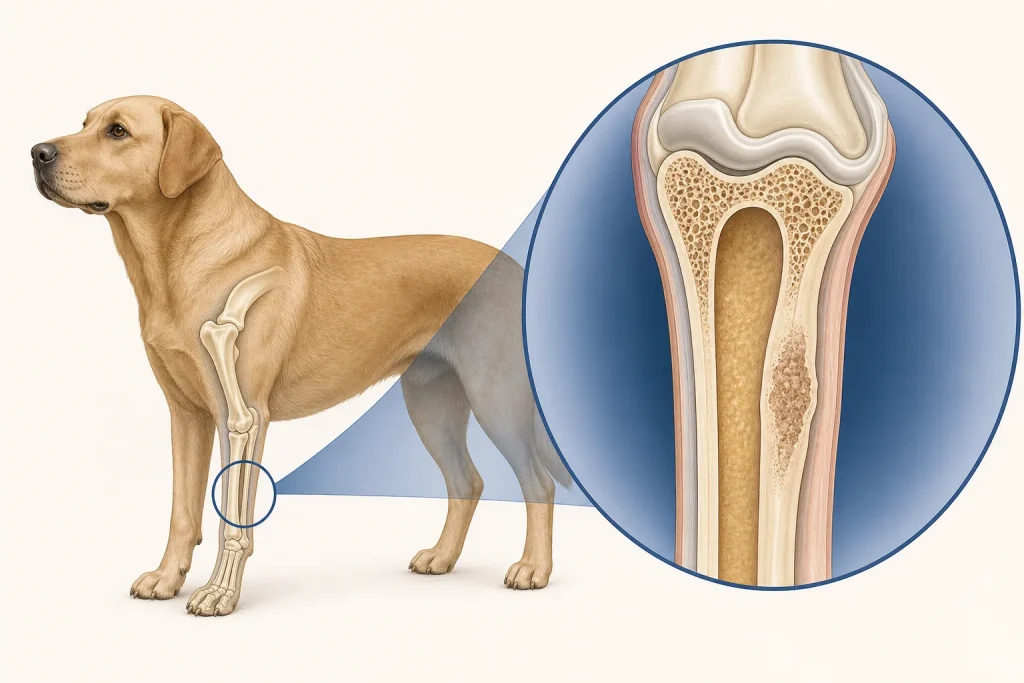
Summary
Bisphosphonates may be discussed as part of a multimodal plan for malignant bone pain, but fracture risk, kidney status, pain measurement, local treatment, and evidence limitations remain central.
Article
Evidence-informed clinical review. Tumor-associated osteolysis can produce severe pain and weaken bone. Bisphosphonates inhibit osteoclast activity and are used in selected veterinary patients, but they do not mechanically stabilize a fragile limb or substitute for diagnosis, local control, systemic therapy, or comprehensive analgesia.
The clinical question
The clinical discussion should identify the suspected source of pain, structural integrity of the bone, treatment intent, concurrent analgesics and local options, kidney and hydration status, dental or jaw concerns, and how improved comfort will be measured. A radiographic change and a functional improvement are not the same endpoint.
What current evidence can establish
Veterinary reviews describe bisphosphonate use for malignant osteolysis, while canine studies include small cohorts and combined treatments. Pain guidelines support multimodal assessment. Owner questionnaires, gait or force measures, examination, and valued activities can provide complementary information; none alone proves durable tumor control.
A decision-focused pathway
Confirm the bone diagnosis and fracture risk before increasing activity. Establish baseline pain behavior, limb use, sleep, appetite, mobility, kidney values, hydration, medicines, and relevant dental history. Coordinate infusion or other administration with the oncology service and define laboratory and clinical reassessment.
The broader plan may include surgery, radiation, chemotherapy, analgesics, mobility aids, environmental adaptation, and rehabilitation clearance. If pain improves, activity still must respect bone strength. If pain remains uncontrolled, revise the plan promptly rather than waiting for the next scheduled infusion.
Evidence gaps and interpretation
Evidence does not establish that every bisphosphonate, schedule, tumor, or combination has the same effect. Studies often lack untreated comparison groups or use mixed endpoints. Reduced bone turnover or pain does not equal eradication of tumor, and absence of obvious lameness does not exclude fracture risk.
Safety, monitoring, and escalation
Sudden loss of limb use, severe escalating pain, a new deformity, collapse, or neurologic change needs urgent care. Kidney injury, electrolyte changes, gastrointestinal effects, infusion reactions, and rare jaw complications are relevant. Human bisphosphonates or supplements should never be administered without veterinary prescription.
Measure comfort and function, not only bone images
Bisphosphonates may be considered as one component of a plan for tumor-associated bone pain, but they do not replace diagnosis, fracture-risk assessment, analgesia, local treatment discussion, or activity guidance. The intended endpoint should be stated before use: easier rising, improved weight bearing, more settled sleep, reduced breakthrough pain, or another observable function. Radiographic appearance may not change in parallel with comfort.
Baseline renal and metabolic context, concurrent medicines, hydration status, dental or oral concerns, and the overall treatment plan inform veterinary monitoring. Families should not infer that a scheduled infusion guarantees protection from fracture or tumor progression. A new inability to bear weight, sudden severe pain, swelling, weakness, or other rapid change needs prompt reassessment regardless of when adjunctive treatment was given.
Questions for the veterinary team
- Is the pain linked to malignant osteolysis?
- How high is current fracture risk?
- What endpoint will show meaningful comfort benefit?
- Which kidney, hydration, and dental checks are needed?
- How does this adjunct fit surgery, radiation, and other analgesia?
Medical disclaimer: This article is educational and cannot diagnose, treat, or determine prognosis for an individual dog. It does not replace an examination or an individualized plan from a licensed veterinarian.