Canine Leukemia: Acute Versus Chronic Is More Than a White-Cell Count
Summary
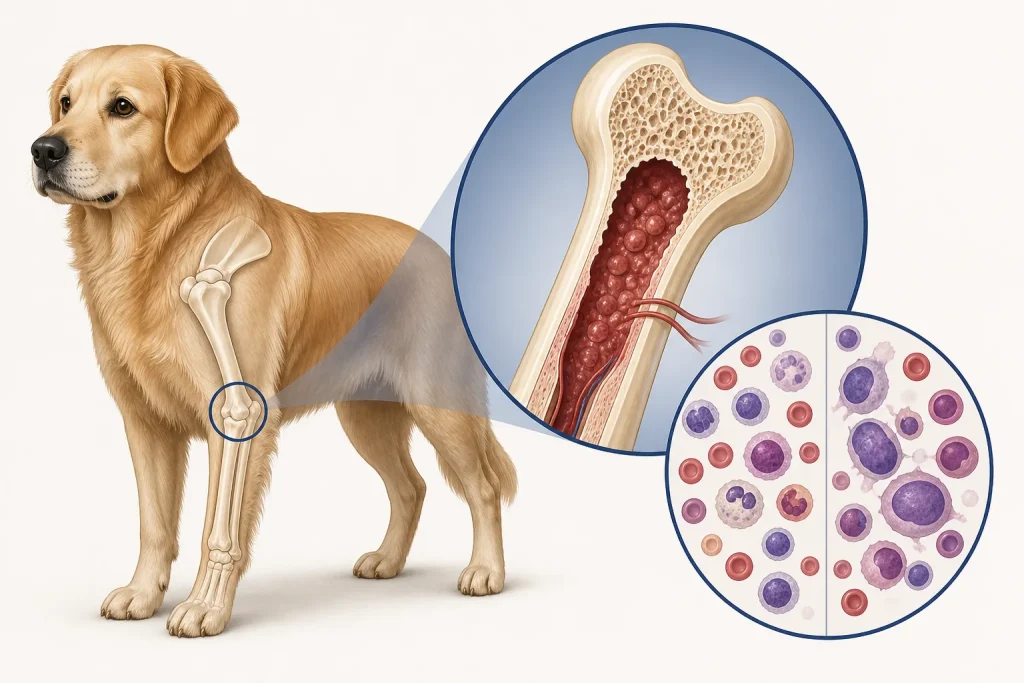
Leukemia classification integrates cell maturity, lineage, blood-smear morphology, flow or molecular testing, marrow findings, cytopenias, organ involvement, and clinical tempo.
Article
Evidence-informed clinical review. A very high or very low white-cell count can prompt concern for leukemia, yet infections, inflammation, immune disease, drug effects, marrow failure, and other cancers can produce overlapping patterns. Conversely, some leukemias do not present with dramatic circulating cell numbers. Classification should begin with morphology and a defined diagnostic question.
The clinical question
The team needs to decide whether abnormal cells are neoplastic, whether they are lymphoid or myeloid, whether the process is acute or chronic, and how marrow function and organs are affected. Those answers influence urgency, likely treatment approach, supportive needs, and the strength of any prognosis discussion.
What current evidence can establish
A manually reviewed blood smear can identify abnormal populations and guide the next test. Flow cytometry characterizes markers on viable cells; clonality assays answer selected lymphoid questions; cytochemistry and immunohistochemistry may support lineage; marrow aspirate and core biopsy provide complementary cellular and architectural information. No method should be interpreted in isolation.
A decision-focused pathway
Repeat or confirm unexpected counts, review instrument flags, and correlate the smear with anemia, platelets, reticulocytes, chemistry, examination, and medication exposure. Contact the chosen laboratory before collection so fresh samples, slides, anticoagulant, transport conditions, and marrow material are allocated correctly. Avoid consuming the only specimen with one test.
The treatment plan should distinguish antineoplastic intent from immediate supportive priorities such as bleeding, infection, symptomatic anemia, metabolic disturbance, pain, or hydration. Baseline measurements and response criteria need to be written before therapy. If classification remains uncertain, state how that uncertainty affects options rather than forcing a precise label.
Evidence gaps and interpretation
Canine leukemias are uncommon and heterogeneous, and older classification systems may not map neatly to current panels. Marker expression can be aberrant, prior treatment can reduce diagnostic yield, and reactive clonal patterns can occur. Outcome data from one lineage or chronicity category cannot be generalized to another.
Safety, monitoring, and escalation
Fever with marked illness, uncontrolled bleeding, collapse, breathing difficulty, severe weakness, or neurologic change requires urgent assessment. Dogs with cytopenias may face infection and hemorrhage risk during routine procedures. Steroids or chemotherapy before sampling can alter findings and should not be started from an online suspicion.
Cell maturity and lineage matter more than one count
An abnormal white-cell count can be dramatic without establishing leukemia, and leukemia can be present without an extreme total count. The diagnostic sequence examines cell morphology, persistence, other blood-cell lines, clinical context, and whether reactive inflammation or medication effects remain plausible. Flow cytometry, clonality testing, cytochemistry, and marrow examination answer different questions and are selected according to the suspected lineage and maturity.
Acute and chronic classifications carry implications beyond the number printed on the CBC. The percentage and appearance of immature cells, marrow production, anemia or thrombocytopenia, organ involvement, and the dog's clinical stability all contribute. A laboratory label should therefore travel with the specimen type, method, and limitations. Serial comparison is most informative when pre-analytic quality and the testing platform are consistent.
Questions for the veterinary team
- What does the blood-smear morphology show?
- Which test will establish lineage and maturity?
- Are aspirate and core marrow samples both needed?
- Which cytopenia or organ effect needs immediate support?
- How will response be defined and measured?
Medical disclaimer: This article is educational and cannot diagnose, treat, or determine prognosis for an individual dog. It does not replace an examination or an individualized plan from a licensed veterinarian.