Skip to content
  • An Ulcerated Tumor at Home: Build a Clean, Calm Wound Routine

    An Ulcerated Tumor at Home: Build a Clean, Calm Wound Routine

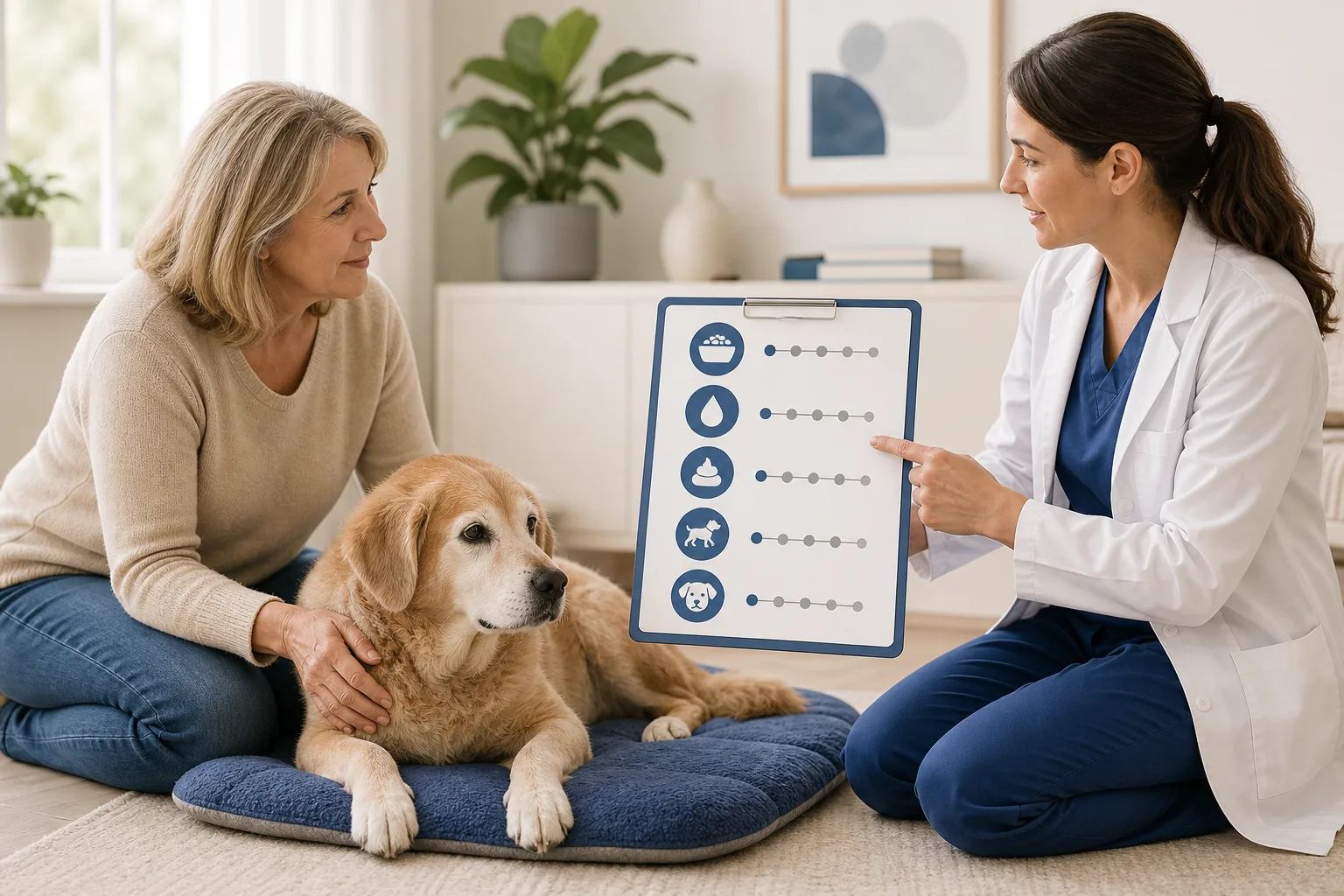
    An open tumor can look alarming and may smell, drain, bleed, or stick to bedding. The goal of home care may be comfort and containment rather than closure. Ask the veterinary team to demonstrate each step, because products and dressings that suit ordinary wounds may injure fragile tumor tissue.

    Why this deserves a plan

    Odor and discharge can arise from necrosis as well as infection. Tight dressings can trap moisture or compromise circulation, while repeated scrubbing can trigger pain and bleeding. A plan that names the specific problem avoids changing several products whenever the appearance shifts.

    Prepare before the stressful moment

    Create a washable area with good light, disposable barrier, approved gloves, clinic-selected contact layer and dressing, waste bag, protective collar, and emergency compression supplies if prescribed. Keep children and other animals away. Confirm how to protect surrounding skin and when the wound should remain uncovered.

    What to observe and record

    At each planned change, note pain, bleeding, color, odor, amount and type of drainage, surrounding redness, swelling, heat, licking, and whether the dressing adhered or slipped. Photograph at the interval the clinic requests. Record all topical and systemic medicines and actual change frequency.

    When to call or escalate

    Major bleeding, pale gums, collapse, severe pain, rapidly spreading redness, fever with illness, breathing compromise, or a dressing that impairs circulation needs urgent assessment. Call earlier when odor, drainage, or pain changes substantially, even if the next oncology visit is days away.

    What not to improvise

    Do not scrub, cut tissue, cauterize, use peroxide, alcohol, essential oils, powders, or human antibiotic cream. Do not place adhesive directly on fragile skin or wrap more tightly to stop persistent bleeding. Never allow licking as a method of cleaning.

    Judge the routine by comfort and containment

    An ulcerated mass may not progress like a healing surgical incision, so “better” needs to be defined for that dog. Useful goals can include less adherence to bedding, fewer episodes of licking, manageable drainage, protected surrounding skin, and a dressing change the dog can tolerate. Ask the clinic which observations reflect the tumor itself and which suggest a complication that could change the plan.

    Before each change, arrange supplies in order and decide how the dog will be positioned without pressure on the mass. Note whether the contact layer releases as demonstrated, whether fluid has reached the outer dressing, and whether the skin beside the wound is becoming damp or irritated. If changes are increasingly painful or require more restraint, report that pattern rather than simply working faster. The team may need to reconsider analgesia, dressing materials, frequency, protective equipment, or whether an uncovered approach is more appropriate for the site.

    Take these questions to the care team

    • Is the goal comfort, containment, or healing?
    • What evidence suggests infection?
    • Which dressing and change interval are approved?
    • How do we manage a small versus major bleed?
    • When is home care no longer safe?

    Medical disclaimer: This article is educational and cannot diagnose, treat, or determine prognosis for an individual dog. It does not replace an examination or an individualized plan from a licensed veterinarian.
    Sources and further reading

  • Prepare for a Tumor-Related Bleeding Crisis Before It Happens

    Prepare for a Tumor-Related Bleeding Crisis Before It Happens

    Some vascular, ulcerated, oral, nasal, splenic, liver, or internal tumors can bleed. Not every dog is at equal risk, and many bleeding events cannot be managed at home. Planning does not predict that a crisis will occur; it removes decisions from the most frightening minutes.

    Why this deserves a plan

    Blood can look dramatic, while dangerous internal bleeding may be less visible. Families need to know which finding deserves gentle local pressure and a call, which requires immediate transport, and how pale gums, weakness, abdominal enlargement, breathing change, or collapse alter the response.

    Prepare before the stressful moment

    Ask the clinician where bleeding is most likely and whether local pressure is safe. Identify the nearest open emergency service, route, phone number, vehicle setup, lifting help, and financial or consent decisions. Keep a current medicine and supplement list because anticoagulants, NSAIDs, and some products may affect risk.

    What to observe and record

    Record the site, start time, estimated amount using practical descriptions, whether pressure was applied, gum color, breathing, alertness, abdominal size, and ability to stand. Use only the dressing or pressure technique the team demonstrated. Call while another person prepares transport when signs are severe.

    When to call or escalate

    Collapse, pale or white gums, rapid or difficult breathing, profound weakness, a distended abdomen, uncontrolled external bleeding, repeated swallowing of blood, or rapid deterioration is an emergency. A dog may temporarily appear better after internal bleeding; that does not make waiting safe.

    What not to improvise

    Do not tourniquet a tumor, repeatedly remove a clot to inspect it, pack a nose or mouth, give human clotting products, or administer a supplement as emergency treatment. Do not drive alone with an unstable large dog if safe help is available. Home first aid must not delay transport.

    Rehearse the handoff before transport is urgent

    Place the diagnosis, likely bleeding site, current medicines, agreed treatment limits, and emergency contact on a page that travels with the dog. Decide who calls ahead, who drives, who keeps the dog safely positioned, and who brings records and payment information. If the dog is large or weak, practice the approved lifting or stretcher method while the dog is stable instead of inventing one during collapse.

    Tell the emergency service what can be seen and what cannot: external blood, swallowed blood, sudden weakness, abdominal enlargement, gum color, breathing effort, or loss of responsiveness. Avoid delaying departure to obtain an exact volume. A practical description of soaked materials, recurring flow, and changes in the dog’s condition is more useful than a false measurement. After any smaller episode, ask whether the event changes the expected risk, monitoring plan, or thresholds for future transport; a stopped surface bleed does not answer whether another site is involved.

    Take these questions to the care team

    • Where is bleeding most likely?
    • Is gentle pressure safe at that site?
    • Which signs indicate internal blood loss?
    • Where will we go after hours?
    • What are our care limits if bleeding recurs?

    Medical disclaimer: This article is educational and cannot diagnose, treat, or determine prognosis for an individual dog. It does not replace an examination or an individualized plan from a licensed veterinarian.
    Sources and further reading

  • Make a Breathing-Distress Action Card for a Dog With Cancer

    Make a Breathing-Distress Action Card for a Dog With Cancer

    Breathing difficulty can arise from lung or airway disease, pleural or pericardial fluid, anemia, pain, fever, medication effects, or other emergencies. Dogs in distress can worsen with restraint, heat, excitement, or repeated examination at home. The plan should be simple enough to use under pressure.

    Why this deserves a plan

    Families may spend dangerous minutes counting, filming, searching online, or trying to decide whether the dog is anxious. A veterinarian can help define the dog’s usual resting pattern and the observable changes that mean leave now. Exact numeric thresholds, if used, must come from that patient’s team.

    Prepare before the stressful moment

    Write the emergency hospital, route, phone, parking or arrival instructions, and a second driver or lifting helper. Keep the diagnosis, current medicines, recent imaging, oxygen or sedation history, and agreed care limits accessible. Make the vehicle cool and use the least restrictive safe transport method.

    What to observe and record

    When the dog is comfortable, learn what normal resting breathing looks like. During a change, observe effort, posture, neck extension, abdominal movement, noise, gum color, ability to settle, collapse, cough, and timing. Call ahead briefly, then transport; do not prolong observation to make a perfect video.

    When to call or escalate

    Open-mouth or labored breathing, blue or gray mucous membranes, collapse, inability to rest, severe airway noise, or rapidly worsening effort is an emergency. Pale gums with weakness can also reflect anemia or bleeding. Use the emergency pathway even if the dog improves temporarily during the call.

    What not to improvise

    Do not force food, water, pills, or a muzzle onto a dog struggling to breathe. Do not place the dog in a hot enclosed space or press on the chest or neck. Home oxygen or sedatives require a veterinarian-designed setup and cannot replace emergency evaluation.

    Design the card for the first minute

    The top of the card should state the action, destination, and call-ahead number before any background detail. Beneath that, list the cancer diagnosis, known chest or airway problems, current medicines, recent procedures, and any handling that previously worsened breathing. Add the least stressful way to move the dog and the name of the person who can help lift or drive.

    Use calm periods to learn the dog’s normal posture, sound, effort, and ability to settle, then describe changes with ordinary words. In a crisis, do not turn the card into a home examination checklist. Note the onset and the most obvious change, keep handling minimal, and leave. If the dog seems easier in the cooler vehicle or after excitement falls, continue with the emergency plan unless the receiving veterinary team directs otherwise; temporary improvement does not identify the cause or remove the need for assessment.

    Take these questions to the care team

    • What is this dog’s normal resting pattern?
    • Which change means immediate transport?
    • How should the dog be positioned and moved?
    • What information does the emergency team need?
    • What are our stabilization and care limits?

    Medical disclaimer: This article is educational and cannot diagnose, treat, or determine prognosis for an individual dog. It does not replace an examination or an individualized plan from a licensed veterinarian.
    Sources and further reading

  • Breakthrough Pain: Write the Rescue Plan Before the Bad Night

    Breakthrough Pain: Write the Rescue Plan Before the Bad Night

    Cancer pain can flare despite a regular regimen. Dogs may pant, pace, guard, tremble, withdraw, refuse movement, stop eating, wake repeatedly, or change posture. These signs can also reflect nausea, breathing difficulty, urinary problems, or neurologic disease, so the plan must include both relief and diagnostic boundaries.

    Why this deserves a plan

    Caregivers under stress may repeat a dose too soon, combine prescriptions, add a human pain reliever, or wait because the next appointment is scheduled. A written rescue plan protects the dog and makes it easier to report whether the intervention restored a valued function.

    Prepare before the stressful moment

    Ask the prescriber to list baseline medicines, the exact rescue option if one is appropriate, when it may be used, what must not be combined, and when to call before giving anything. Keep pharmacy access and after-hours options in mind before weekends or travel.

    What to observe and record

    Record the suspected pain site, behavior, activity that became difficult, time, trigger, medicines actually given, and response over the reassessment window supplied by the clinic. Note sedation, wobbliness, vomiting, stool, urination, breathing, and whether the dog can rest, rise, and toilet.

    When to call or escalate

    Severe unrelenting pain, sudden inability to use a limb, suspected fracture, collapse, breathing difficulty, a distended abdomen, inability to urinate, or new neurologic loss requires urgent assessment. Repeated rescue use or shorter relief means the baseline plan needs review.

    What not to improvise

    Do not give ibuprofen, naproxen, acetaminophen, aspirin, another pet’s medicine, or extra steroid or NSAID. Do not force massage, stretching, heat, or walking over a painful tumor or fragile bone. Sedation is not proof that pain is controlled.

    Choose a function that reveals whether relief is meaningful

    Pain notes become more useful when they connect behavior to an ordinary action: settling into sleep, rising without repeated attempts, walking to toilet, lowering the head to eat, or allowing gentle care. Record what the dog could do before the flare, what changed, and whether the prescribed rescue step restored that function. A quieter dog who remains unable to move comfortably may be sedated without having adequate relief.

    Keep a separate line for possible adverse effects such as marked sleepiness, loss of balance, vomiting, agitation, or breathing change. If flares cluster around a particular movement, wound care, trip outside, or time in the medication schedule, share the pattern rather than changing timing yourself. Repeated loss of the same valued function can signal that the baseline plan, environment, mobility support, or disease assessment deserves review. The purpose of the log is to support that reassessment, not to prove that every restless episode was cancer pain.

    Take these questions to the care team

    • How does this dog show pain?
    • What rescue medicine is prescribed?
    • When should it begin helping?
    • Which drugs must not be combined?
    • What sign means emergency care rather than another dose?

    Medical disclaimer: This article is educational and cannot diagnose, treat, or determine prognosis for an individual dog. It does not replace an examination or an individualized plan from a licensed veterinarian.

    Sources and further reading

  • The Overnight Hospice Plan: Prepare for Symptoms When the Regular Clinic Is Closed

    The Overnight Hospice Plan: Prepare for Symptoms When the Regular Clinic Is Closed

    Night can magnify uncertainty. A dog may become restless, painful, breathless, confused, unable to toilet, or unwilling to eat when the usual clinic is closed. Hospice planning should anticipate likely events without suggesting that every crisis can or should be managed at home.

    Why this deserves a plan

    The difference between a manageable symptom and an emergency depends on the dog, disease, available medicines, caregiver skill, and goals. Writing the plan with the veterinarian protects against unsafe dosing, prolonged suffering, and frantic searches for a service that cannot provide the chosen care.

    Prepare before the stressful moment

    Post the primary, hospice, and emergency numbers; confirm hours and whether home visits exist. Keep transport help, carrier or approved harness, records, medicines, payment, and aftercare preferences accessible. Decide who can authorize care and which interventions fit the family’s goals and practical limits.

    What to observe and record

    For each likely symptom, write the early sign, prescribed action, reassessment time, and escalation point. Include pain, breathing, bleeding, seizures, vomiting, agitation, wounds, urination, and mobility only as relevant. Record what happens overnight so the daytime team can revise the plan.

    When to call or escalate

    Uncontrolled pain, severe breathing distress, major bleeding, repeated seizures, collapse, inability to urinate, profound agitation, or rapid decline requires urgent veterinary help. If the agreed home response does not restore comfort in the specified window, escalation is part of hospice care, not a failure.

    What not to improvise

    Do not combine sedatives or pain medicines, use human products, force food or water, or attempt a procedure because travel feels difficult. Do not assume natural death will be peaceful without professional support. A humane euthanasia plan should be available before a crisis becomes unmanageable.

    Check that the nighttime pathway really exists

    Call intended services in advance to confirm their current hours, location, arrival process, and whether they provide the type of care the family expects. A home-visit provider, emergency hospital, and daytime clinic may offer different services. Write those differences on the plan so a caregiver does not discover them while the dog is distressed. Include a backup destination in case staffing, distance, or weather changes access.

    Keep each symptom instruction tied to the veterinarian’s written response and a clear contact point. The page should not become a long catalogue of every possible event. Prioritize the problems already likely for this dog, the signs that mean comfort has not returned, and the decision-maker who can authorize escalation or euthanasia. After a difficult but nonfatal night, send the actual timeline to the hospice or primary team. What happened, which prescribed actions were used, and how long comfort lasted can expose a gap before the next overnight crisis.

    Take these questions to the care team

    • Which crisis is most likely?
    • What prescribed action is safe at home?
    • How soon should comfort return?
    • Where do we go overnight?
    • When would euthanasia prevent further suffering?

    Medical disclaimer: This article is educational and cannot diagnose, treat, or determine prognosis for an individual dog. It does not replace an examination or an individualized plan from a licensed veterinarian.

    Sources and further reading

  • Considering a Canine Cancer Clinical Trial? Bring This Consent Checklist

    Considering a Canine Cancer Clinical Trial? Bring This Consent Checklist

    A clinical trial may be worth exploring, but a listing is not a recommendation and the newest option is not automatically the best fit. The study exists to generate knowledge. Your dog’s welfare, ordinary care options, travel tolerance, comorbidities, and your ability to follow the protocol remain central.

    Why this deserves a plan

    Recruitment pages are summaries. The consent document and study team should explain randomization, masking, control or placebo, required biopsies or imaging, standard treatment allowed or restricted, who pays, and what happens if the dog worsens. You may ask for time and involve your usual veterinarian.

    Prepare before the stressful moment

    Collect the confirmed diagnosis, pathology, stage, prior treatments, current medicines, laboratory and imaging records, and realistic travel schedule. Ask whether screening tests create costs or risks even if the dog is ineligible. Write down the reasonable non-trial choices before comparing them.

    What to observe and record

    Separate routine care from research-only procedures. Record study contact, sponsor, oversight body, arm assignment process, visit calendar, emergency pathway, covered and uncovered costs, adverse-event reporting, tissue and data use, withdrawal terms, and whether results or incidental findings will be shared.

    When to call or escalate

    Report new signs through the protocol, but seek emergency care first when the dog is unstable. Ask whether outside emergency treatment could affect eligibility and how records will transfer. Participation should not depend on hiding symptoms, medicines, supplements, or care received elsewhere.

    What not to improvise

    Do not assume enrollment means the dog receives the investigational treatment or will benefit. Do not delay an urgent standard intervention while waiting for an email about eligibility. Never change medication to fit criteria without both the study team and treating veterinarian.

    Compare the trial with the real alternative

    Make parallel columns for trial participation and the most reasonable non-trial plan. Compare purpose, required visits, travel, examinations, imaging or sampling, medicines allowed or restricted, likely time burden, direct costs, emergency access, and what happens if the cancer progresses. This keeps “research” from being compared with an empty space and helps reveal burdens that a short recruitment notice may omit.

    On the trial side, label which procedures are required for the dog’s ordinary care and which exist mainly to answer the study question. Ask who reviews safety information, who receives adverse-event calls outside business hours, and how records reach the regular veterinarian. The consent discussion should also cover voluntary withdrawal, removal by investigators, care after withdrawal, and any effect on access to other options. Keep a copy of the signed document and current contact details; if the protocol is amended, ask what changed before agreeing to continue.

    Take these questions to the care team

    • What question is the study designed to answer?
    • Which arm could my dog receive?
    • What is research-only?
    • Who pays for complications?
    • What happens if we withdraw?

    Medical disclaimer: This article is educational and cannot diagnose, treat, or determine prognosis for an individual dog. It does not replace an examination or an individualized plan from a licensed veterinarian.

    Sources and further reading

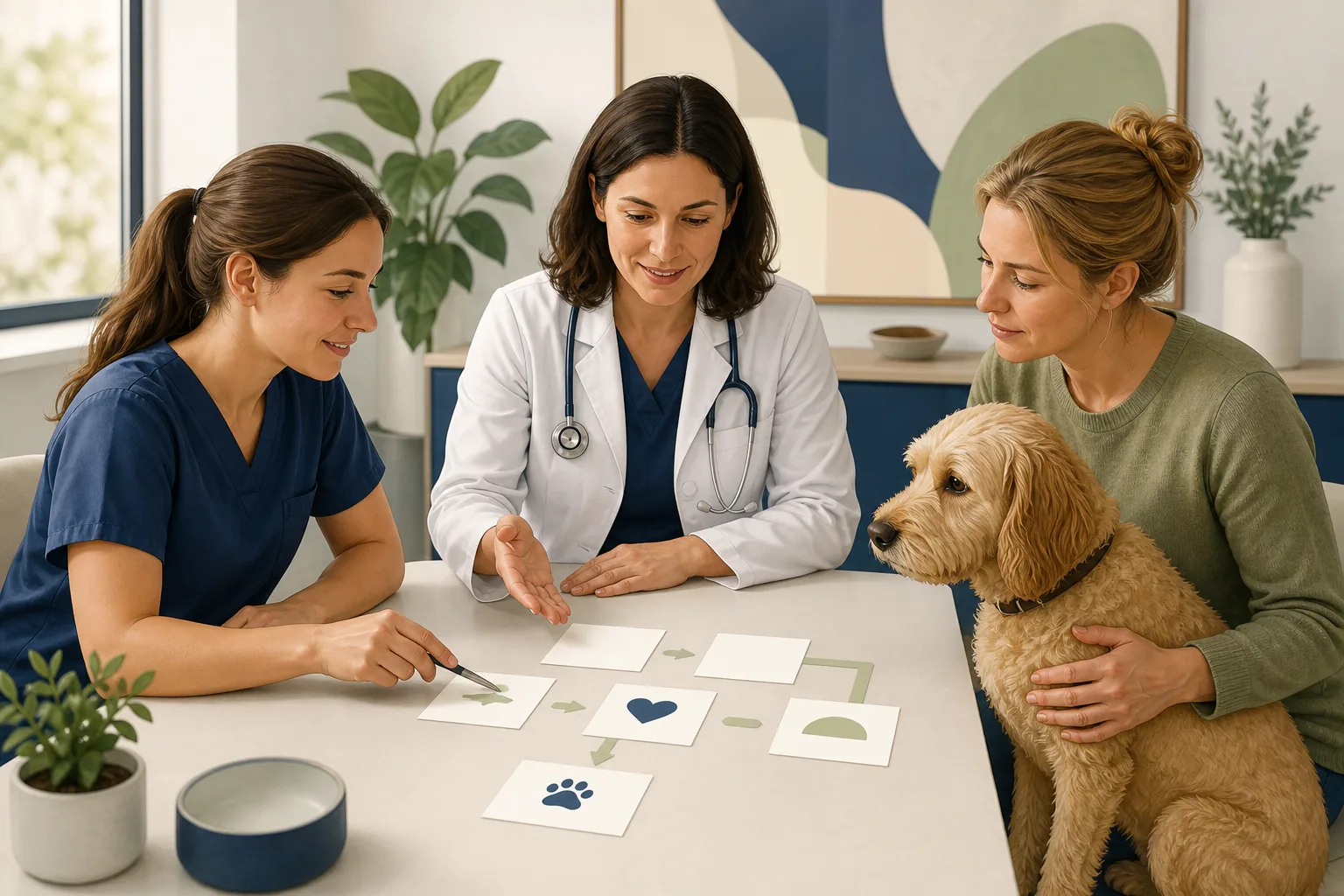
  • After a Multidisciplinary Cancer Review: Ask for One Shared Summary

    After a Multidisciplinary Cancer Review: Ask for One Shared Summary

    Pathology, imaging, surgery, medical oncology, radiation oncology, primary care, nutrition, rehabilitation, and palliative care may each see a different part of the case. A tumor board or coordinated review is valuable only if those perspectives return to the family as one understandable, actionable plan.

    Why this deserves a plan

    Without a shared summary, families can receive conflicting dates, duplicate tests, incompatible medication advice, or no clear owner for follow-up. Agreement is not guaranteed, and disagreement can be useful when the reasons and uncertainties are stated plainly instead of hidden.

    Prepare before the stressful moment

    Send complete pathology reports, original imaging or transfer links, laboratory trends, treatment history, current medicine and supplement list, symptoms, goals, travel and financial constraints, and your precise decision question. Ask which disciplines will participate and when the review will occur.

    What to observe and record

    Request a summary that separates diagnosis, grade and stage, working assumptions, missing information, reasonable options, treatment sequence, expected burden, evidence limits, emergency plan, and next decision date. Identify who orders each test, who communicates results, and who changes prescriptions.

    When to call or escalate

    Urgent pain, breathing difficulty, bleeding, obstruction, neurologic decline, or systemic illness should be treated while coordination proceeds. A scheduled conference is not a reason to delay stabilization. Tell every team member if the dog changes after the records were submitted.

    What not to improvise

    Do not assume more specialists automatically produce a better decision. Avoid forwarding screenshots without the full report or sending different medication lists to different services. Do not leave the meeting with several options but no owner, sequence, or deadline for the next step.

    Turn recommendations into a version-controlled plan

    Ask the summary to identify the evidence reviewed, including the dated pathology report, imaging study, laboratory results, and treatment history. Beside each conclusion, note whether it is confirmed, favored, uncertain, or still awaiting information. If specialists disagree, record the actual point of disagreement and what additional finding would resolve it; “discussed at tumor board” should not erase uncertainty.

    The action section should name the clinician responsible for every order, result, prescription, referral, and family update. It should also state the intended sequence: which step must happen first, which can proceed in parallel, and which decision will be reconsidered after new information arrives. Send the final version to primary care and every participating service, then correct medication or date conflicts in the shared document rather than in separate messages.

    When circumstances change, add a dated amendment that explains what changed and whether earlier recommendations still apply. This preserves the reasoning behind a new direction and prevents an outdated screenshot from becoming the working plan. The family should know which version is current and whom to contact when two portals display different instructions.

    Take these questions to the care team

    • What decision did the review address?
    • Where did clinicians agree or disagree?
    • Who owns each next action?
    • What can proceed while uncertainty remains?
    • Who explains changes to the family?

    Medical disclaimer: This article is educational and cannot diagnose, treat, or determine prognosis for an individual dog. It does not replace an examination or an individualized plan from a licensed veterinarian.

    Sources and further reading

  • Raw Food During Cancer Care: Protect the Dog and the Household From Added Risk

    Raw Food During Cancer Care: Protect the Dog and the Household From Added Risk

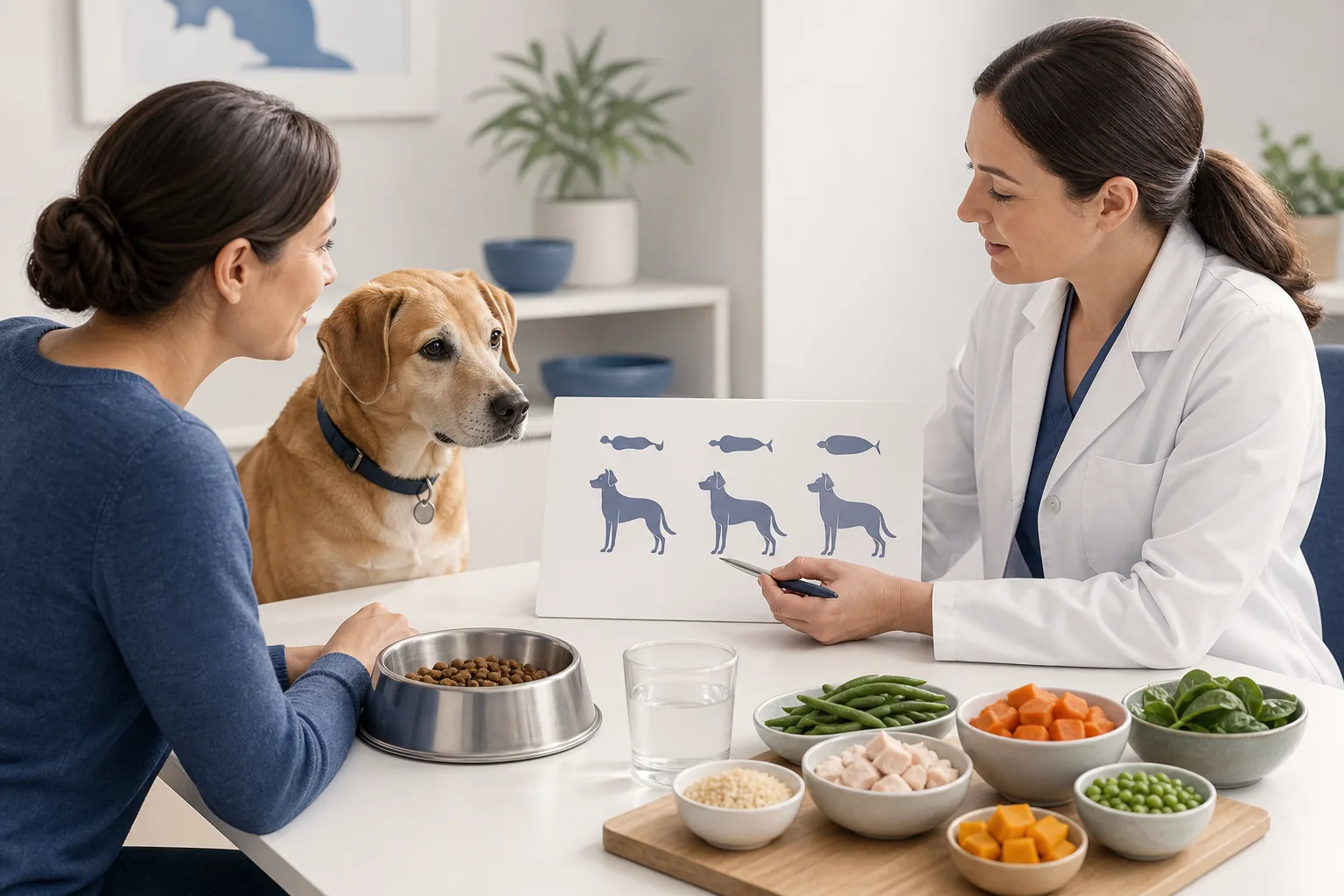
    Cancer treatment can change infection risk, and raw meat, bones, eggs, or unpasteurized products can carry bacteria that affect the dog, contaminate bowls and surfaces, or spread through saliva and stool. Freezing, sourcing claims, or a healthy appearance cannot guarantee that a batch is pathogen-free.

    Why this deserves a plan

    AAHA oncology guidance advises against raw diets for oncology patients, and FDA materials describe patient and household hazards. The concern is not a claim that every exposed dog becomes ill. It is an avoidable risk without established evidence that raw feeding improves tumor outcome.

    Prepare before the stressful moment

    Photograph the complete label of every food, topper, treat, chew, and supplement. Identify who prepares meals, who is pregnant, very young, elderly, or immunocompromised in the home, and how bowls and waste are handled. Ask whether the current diet has a nutritional adequacy statement.

    What to observe and record

    If changing food, request a gradual, patient-specific transition unless urgency or the veterinarian dictates otherwise. Record actual intake, stool, vomiting, weight, and muscle condition. Use clean utensils and surfaces, wash hands, store food safely, and follow recall or lot information for commercial products.

    When to call or escalate

    Vomiting, diarrhea, blood in stool, fever concern, marked weakness, dehydration, or illness in a vulnerable household member deserves prompt professional advice. A neutropenic or systemically ill dog may need earlier veterinary assessment. Keep food packaging and lot details if illness is suspected.

    What not to improvise

    Do not assume raw is more natural, immune boosting, or anticancer. Do not feed bones as dental or enrichment treatment during thrombocytopenia, oral disease, gastrointestinal risk, or after surgery. Avoid replacing a complete diet with unbalanced meat and supplement mixtures.

    Trace the contamination route through the home

    Risk does not end when the meal reaches the bowl. Raw juices can move from packaging to hands, counters, utensils, refrigerator shelves, floors, toys, and waste. The dog may then spread organisms while licking people or surfaces or through stool, even without obvious illness. Map who handles food and cleanup and where vulnerable household members could encounter those routes.

    If the care team recommends changing the diet, choose a complete, balanced alternative the dog can eat and the household can handle consistently. Keep raw products and their utensils away from human food while they remain in the home, clean preparation areas promptly, and prevent other pets from reaching leftovers or waste. Do not treat freezing, freeze-drying, a boutique label, or claims about sourcing as proof that handling precautions are unnecessary. Save labels and lot information for any commercial product so a recall or suspected foodborne illness can be traced, and tell both veterinary and human health professionals about relevant exposures.

    Take these questions to the care team

    • Is this dog immunocompromised now?
    • Is the diet complete and balanced?
    • What safer palatable alternatives exist?
    • Who in the household is vulnerable?
    • How should food hygiene and lot tracking work?

    Medical disclaimer: This article is educational and cannot diagnose, treat, or determine prognosis for an individual dog. It does not replace an examination or an individualized plan from a licensed veterinarian.

    Sources and further reading

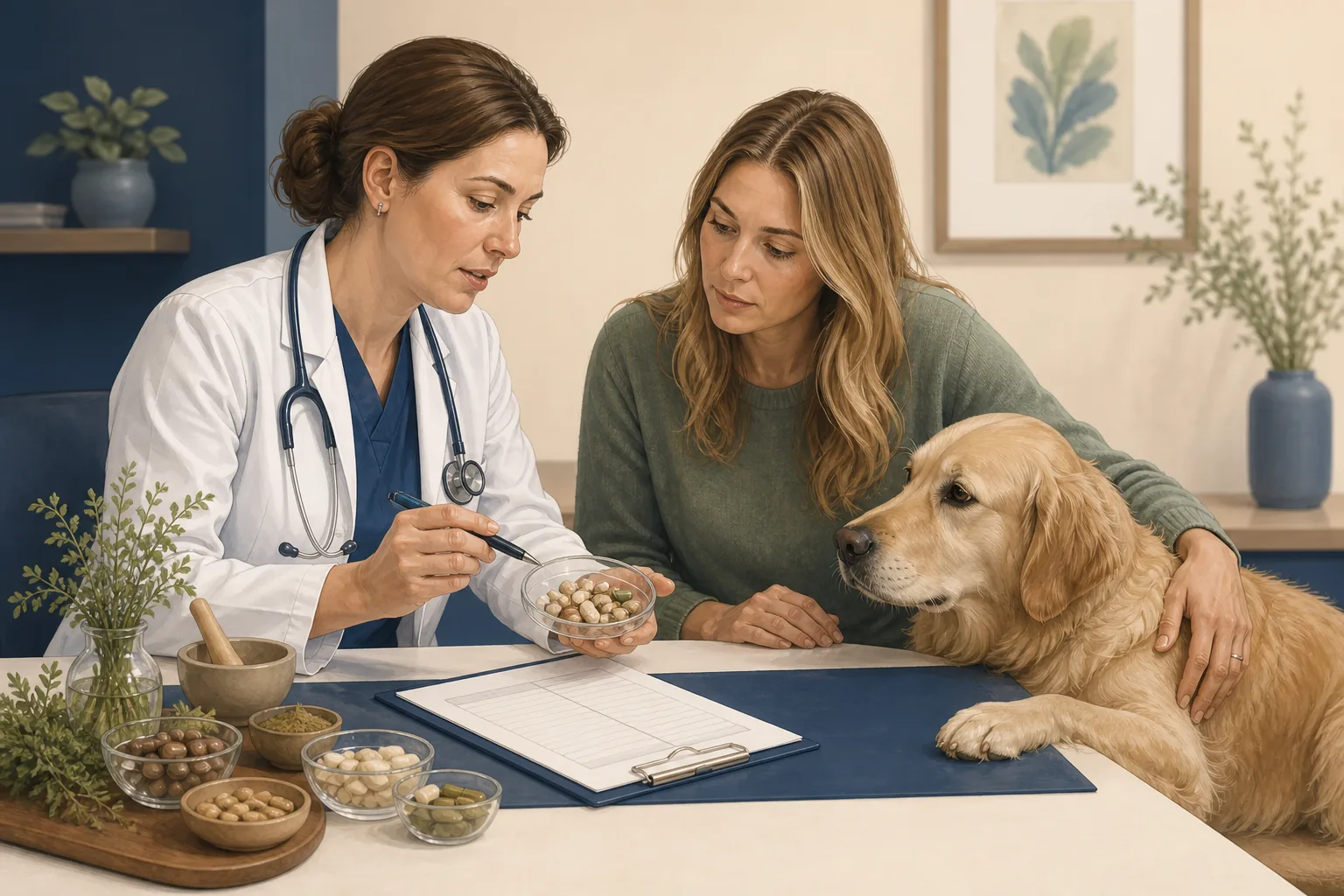
  • Bring a Supplement Inventory to Oncology—Not a Bag of Promises

    Bring a Supplement Inventory to Oncology—Not a Bag of Promises

    Powders, chews, oils, mushrooms, herbs, vitamins, and combination products can feel separate from medicine, but they can affect the stomach, liver, kidneys, bleeding, sedation, appetite, laboratory interpretation, or drug exposure. Brand families change formulas, so the exact label matters more than the category name.

    Why this deserves a plan

    The goal is not to reject every product or accept every natural claim. It is to protect the veterinary plan from hidden duplication, interactions, contamination, and financial burden. A supplement deserves the same clear purpose and follow-up question as any other intervention.

    Prepare before the stressful moment

    Photograph front and back labels, ingredient panel, amount per unit, directions, lot, expiration, country of sale, and quality-testing claims. Record who recommended it, when it started, the intended outcome, cost, and any change since use. Include treats and topical or cannabis products.

    What to observe and record

    At the visit, sort products into continue, stop, hold around a procedure, replace, or insufficient information. Ask whether evidence applies to the exact ingredient and species, whether the dose form is standardized, and which medicine or laboratory value could be affected. Set one measurable supportive goal and review date.

    When to call or escalate

    Report vomiting, diarrhea, bleeding, bruising, sedation, agitation, weakness, appetite change, skin reaction, or a new laboratory abnormality. For severe signs, collapse, breathing difficulty, seizure, or suspected overdose, use urgent veterinary or poison-control guidance rather than waiting for an oncology appointment.

    What not to improvise

    Do not start several products together, copy a human cancer regimen, hide use to avoid disagreement, or treat online testimonials as clinical evidence. Do not claim a supplement shrinks tumors or boosts immunity without product- and outcome-specific canine data. Natural does not mean interaction-free.

    Separate product identity from the marketing claim

    The front label may name a mushroom blend, calming oil, immune formula, or joint chew while the ingredient panel reveals multiple active substances, flavorings, vitamins, minerals, or proprietary amounts. Record the exact manufacturer, product name, formulation, lot, and full panel so the team reviews what is actually used. A study of one ingredient does not automatically support a mixed product, a different extract, or the claim printed on the package.

    Give every proposed supplement a written question: what specific problem is it intended to address, what observable change would count as useful, what adverse signs or laboratory changes matter, and when will it be reconsidered? Track start and stop dates separately from cancer medicines so timing is interpretable. If the composition changes between purchases, treat it as a new review rather than assuming continuity. Cost and administration burden also belong in the record; a product that displaces food, complicates medication, or consumes the household’s care capacity has consequences even when no interaction is immediately visible.

    Take these questions to the care team

    • What exact goal does this product serve?
    • Is evidence specific to this formulation?
    • Which interactions or organ risks matter?
    • How is quality verified?
    • When will we stop if the goal is not met?

    Medical disclaimer: This article is educational and cannot diagnose, treat, or determine prognosis for an individual dog. It does not replace an examination or an individualized plan from a licensed veterinarian.

    Sources and further reading