Product, Therapy & Care Guides
Step-by-step guides for product use, therapy planning, veterinary conversations, monitoring, surgery recovery, chemotherapy support, comfort care, and long-term observation. Guides answer what to do next; Directory entries explain what each product, drug, herb, or therapy is.

After Tumor Surgery: Incision, Comfort, and Pathology Follow-Up
Protect the incision and prescribed activity level, track comfort and basic functions, use medicines exactly as labeled, and turn the pathology report into a follow-up plan.
Read more
Chemotherapy at Home: Side-Effect and Handling Checklist
Keep a daily symptom and medication log, follow drug-specific exposure precautions, complete scheduled laboratory monitoring, and use agreed call thresholds early.
Read morePalladia Companion Guide: Safe Home Handling and Monitoring
Handle intact tablets as a hazardous antineoplastic, record every dose and gastrointestinal or mobility change, complete scheduled exams and laboratory tests, and obey stop-and-call instructions.
Read moreLaverdia Companion Guide: Prescription, Handling, and Home Monitoring
Give only the prescribed intact tablets immediately after food, keep doses at the instructed interval, use chemotherapy gloves and three-day waste precautions, and report adverse changes early.
Read moreThe First 7 Days After Tumor Surgery: A Recovery Planner
Turn the discharge sheet into a seven-day household plan: one medication owner, protected rest, twice-daily incision observations, an eating and toileting record, and a scheduled pathology follow-up. The…
Read moreChemotherapy-Day Logistics: From Check-In to the Next Morning
A chemotherapy visit works best when owners follow the clinic’s food and medication instructions, report changes before treatment, and leave with written handling precautions and a symptom threshold.…
Read more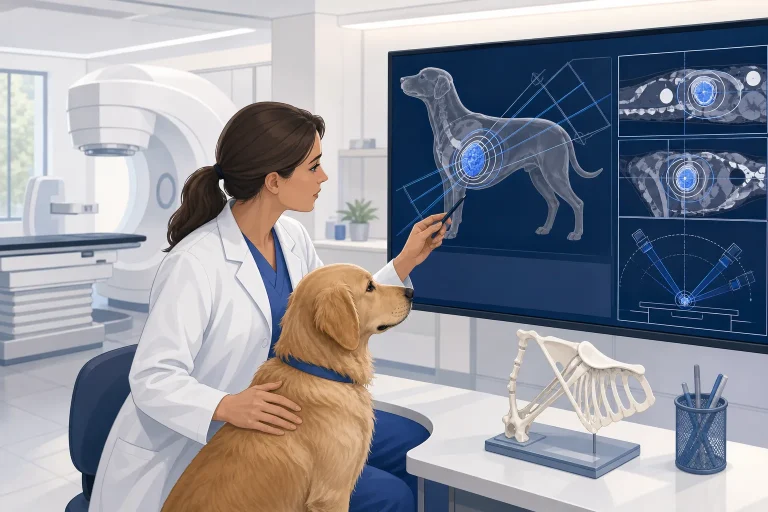
Targeted Cancer Medicine Safety: A Shared Monitoring Plan
Targeted does not mean side-effect free. The prescribing veterinarian and current product labeling determine dose, schedule, handling, drug interactions, laboratory testing, and whether to hold a dose; this…
Read more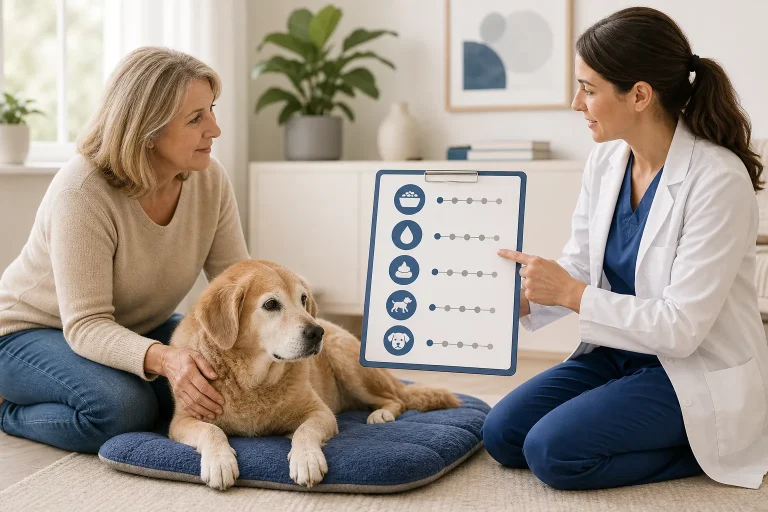
Cancer Pain Conversation: Observe Function, Not Just Vocalization
Dogs may show pain through changed function rather than crying. A useful conversation connects a specific behavior with timing, activity, tumor site, treatment, and medication response so the…
Read more
Weekly Quality-of-Life Review: Trends, Tradeoffs, and Next Decisions
Quality of life is a pattern, not one score. Daily notes become useful when the family and veterinary team review comfort, breathing, eating, hydration, mobility, toileting, interaction, sleep,…
Read moreCanine Cancer Emergency Readiness: Build the Plan Before a Crisis
Emergency readiness does not predict that a crisis will occur. It puts the treating clinic’s dog-specific thresholds, safe first actions, transport route, records, payment and decision contacts in…
Read moreMedication and Side-Effect Log for Canine Cancer Care
A medication log prevents double dosing and turns side effects into a usable timeline. It should record what was actually given, not merely the intended schedule, while all…
Read moreMeasure and Photograph an External Mass: A Repeatable Home Protocol
Use the same landmarks, ruler position, lighting, angles, and schedule so a veterinary team can compare changes without mistaking camera distance or body position for growth.
Read more