Canine Prostatic Neoplasia: Diagnosis Beyond Size and a Plan for Urinary Function
Summary
Prostate size alone cannot distinguish tumor from other disease; tissue diagnosis, urinary anatomy, regional nodes, pelvic bone assessment, and relief of obstruction shape the plan.
Article
Evidence-informed clinical review. Dogs with prostatic cancer may present with blood in urine, difficult urination, straining to defecate, pelvic discomfort, recurrent urinary signs, or metastatic pain. Similar signs occur with infection and other prostatic disorders. Human prostate markers do not translate directly to dogs, and castration history does not rule the disease out.
The clinical question
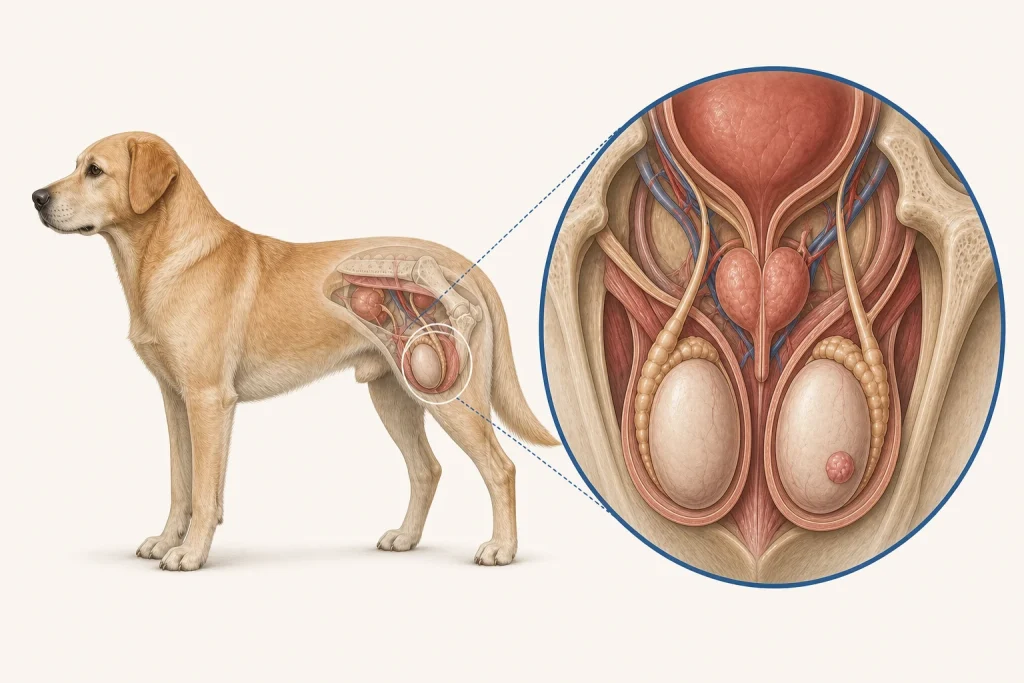
The immediate priorities are to determine whether urine can pass, whether infection or another treatable problem coexists, and whether the lesion involves urethra, bladder, nodes, or bone. The diagnostic plan then asks what tissue route is safest and whether the result will change local, systemic, or palliative options.
What current evidence can establish
Rectal examination, urinalysis and culture, ultrasound, radiographs, CT, cytology, and histopathology contribute different information. Mineralization or irregular architecture may increase concern but is not a stand-alone diagnosis. Urinary molecular testing may support selected urothelial questions, yet it does not map obstruction or replace anatomy and tissue context.
A decision-focused pathway
A dog unable to urinate needs urgent decompression and stabilization before a complete oncology workup. For a stable dog, document urinary stream, pain, infection history, kidney values, prostate and urethral anatomy, regional nodes, and pelvic or spinal findings. Coordinate sample choice with the risk of tumor seeding, infection, bleeding, and anticipated treatment.
Management may combine symptom relief, urinary stenting in selected cases, anti-inflammatory or systemic treatment, radiation, and carefully chosen procedures. The purpose and expected burden of each option should be explicit. Continence, comfort, infection control, bowel function, mobility, and caregiver capacity are meaningful endpoints alongside tumor measurements.
Evidence gaps and interpretation
Canine prostatic tumors are uncommon and often advanced when recognized, so evidence is derived largely from retrospective cohorts and varied protocols. A positive molecular signal, imaging impression, or response to an anti-inflammatory agent does not establish every biologic feature. Treatment comparisons are vulnerable to case-selection bias.
Safety, monitoring, and escalation
Inability to urinate, severe straining with little output, collapse, fever with marked illness, or escalating pelvic pain requires urgent assessment. Procedures and medicines have urinary, kidney, gastrointestinal, bleeding, and continence risks. Human prostate supplements and medications should not be added without veterinary review.
Map urinary consequences alongside tumor extent
Prostatic enlargement is not synonymous with cancer, and gland size alone does not explain how well urine can pass. A useful assessment records stream strength, repeated attempts, pain, blood, retention, infection findings, and whether the urethra, bladder neck, ureters, or adjacent rectum appear affected. Rectal examination and imaging contribute different information; neither provides tissue identity by itself.
Staging questions may include regional lymph nodes, lungs, and bone when signs or tumor behavior make those sites relevant. At the same time, the team needs a functional contingency for worsening obstruction or discomfort. That parallel plan prevents a staging discussion from overlooking the immediate urinary problem. Sampling method, infection testing, imaging, and supportive measures should each be tied to a specific decision, with inability to pass urine treated as an urgent change rather than a routine follow-up item.
Questions for the veterinary team
- Can the dog empty the bladder safely today?
- What evidence distinguishes tumor from infection or other prostate disease?
- Which nodes and bones require assessment?
- How will the plan protect urinary comfort and continence?
- What change triggers urgent decompression or reassessment?
Medical disclaimer: This article is educational and cannot diagnose, treat, or determine prognosis for an individual dog. It does not replace an examination or an individualized plan from a licensed veterinarian.